Manual 3-jaw self-centering scroll chuck for round workpieces and general lathe holding.
3-Jaw Self-Centering Chuck
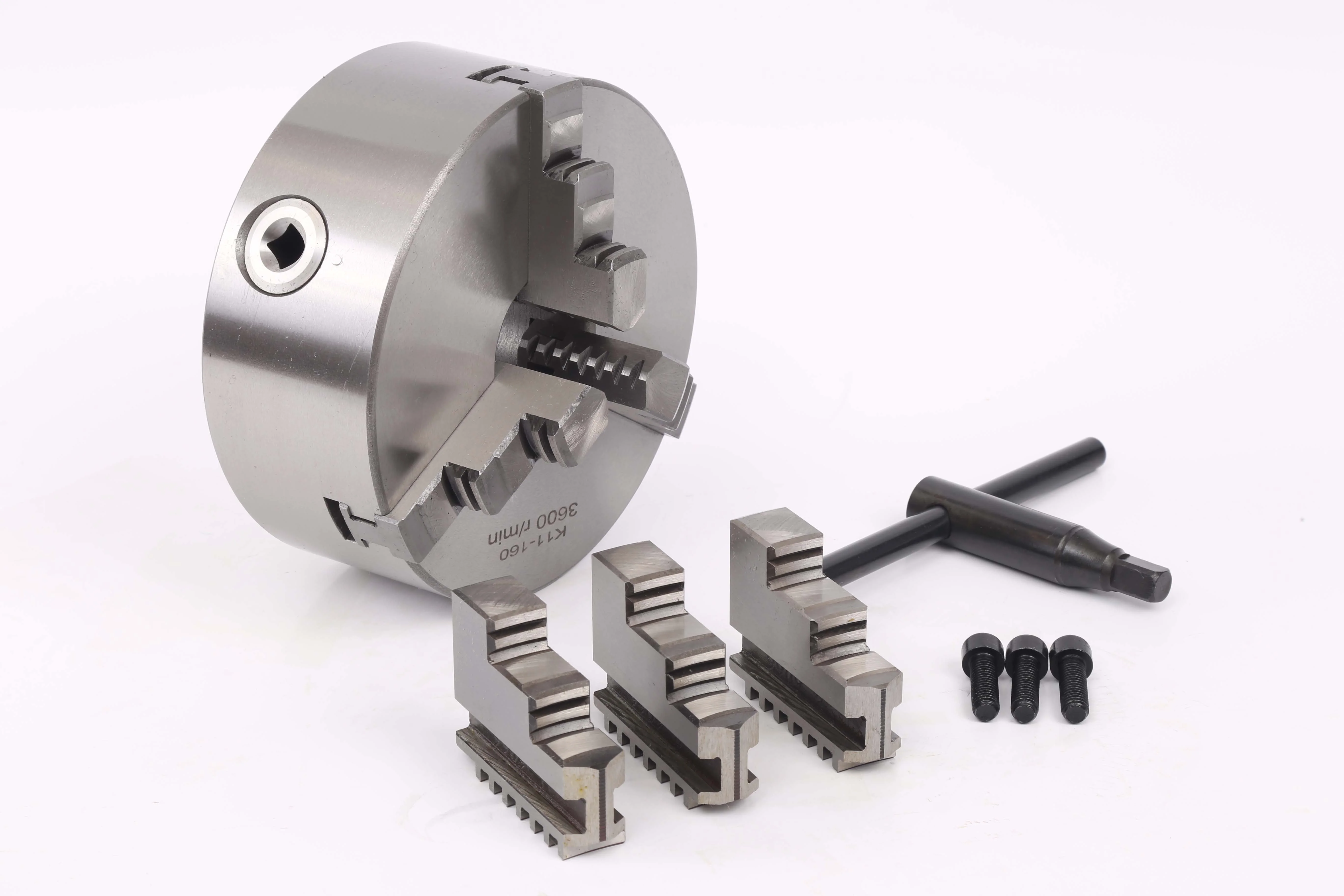
KORRETTO 3-Jaw Self-Centering Chuck is a manual lathe scroll chuck with synchronized jaw movement for round, hexagonal and regular workpieces. It is used for general turning and machining setups where quick centering and stable clamping are required.
Product Overview
The 3-jaw self-centering chuck is also known as a 3-jaw scroll chuck in many lathe applications because the internal scroll mechanism moves all three jaws together toward the center.
It is suitable for workpieces with regular outer profiles and is commonly used on manual lathes, conventional turning machines and general machining setups. Selection should confirm chuck size, mounting interface, clamping range, workpiece shape, required centering accuracy and machine compatibility.
Key Features
| Feature | Description |
|---|---|
| Self-centering scroll action | The internal scroll plate moves all three jaws together for quick centering of round and regular workpieces. |
| Manual lathe scroll chuck | A conventional manual scroll chuck for general turning and repeated setup work. |
| Efficient workpiece loading | Useful when round or hexagonal parts need repeated clamping. |
| Broad size range | Selected according to chuck diameter, clamping range and spindle interface. |
| Separate from independent chucks | Use independent chucks when each jaw must be adjusted separately. |
Typical Applications
- Round bar stock
- Hexagonal workpieces
- General turning operations
- Manual lathe workholding
- Repeated clamping of regular parts
- Standard machining setups
How a 3-Jaw Scroll Chuck Works
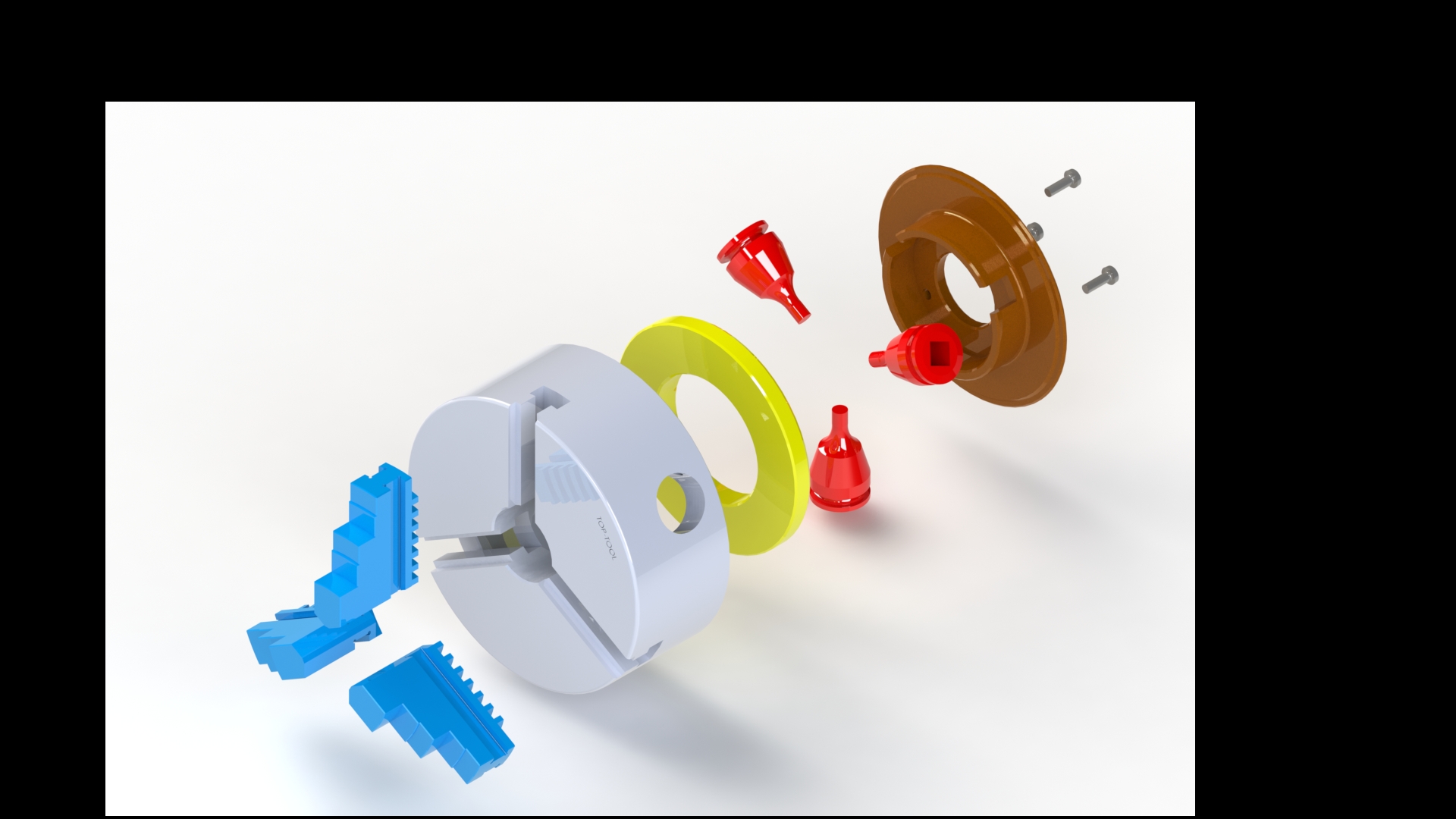
- Turn the chuck key. The bevel pinion drives the scroll plate inside the chuck body.
- Move all three jaws together. The spiral thread of the scroll engages the jaw teeth and moves the jaws radially to center a round or hexagonal workpiece.
- Match the jaws when refitting. Keep the numbered jaws in their matching body slots and engage them in the correct sequence. Remove the chuck key before starting the spindle.
K11 Materials, Matched Jaw Numbers and Accuracy Checks
| Component | Material | Hardness (HRC) |
|---|---|---|
| Jaws | AISI 1045 | 52–58 |
| Chuck body | HT300 | — |
| Scroll plate | AISI 5140 | 43–48 |
| Bevel pinions | AISI 5140 | 45–50 |
| Rear cover | HT100 / engineered plastic, depending on configuration | — |
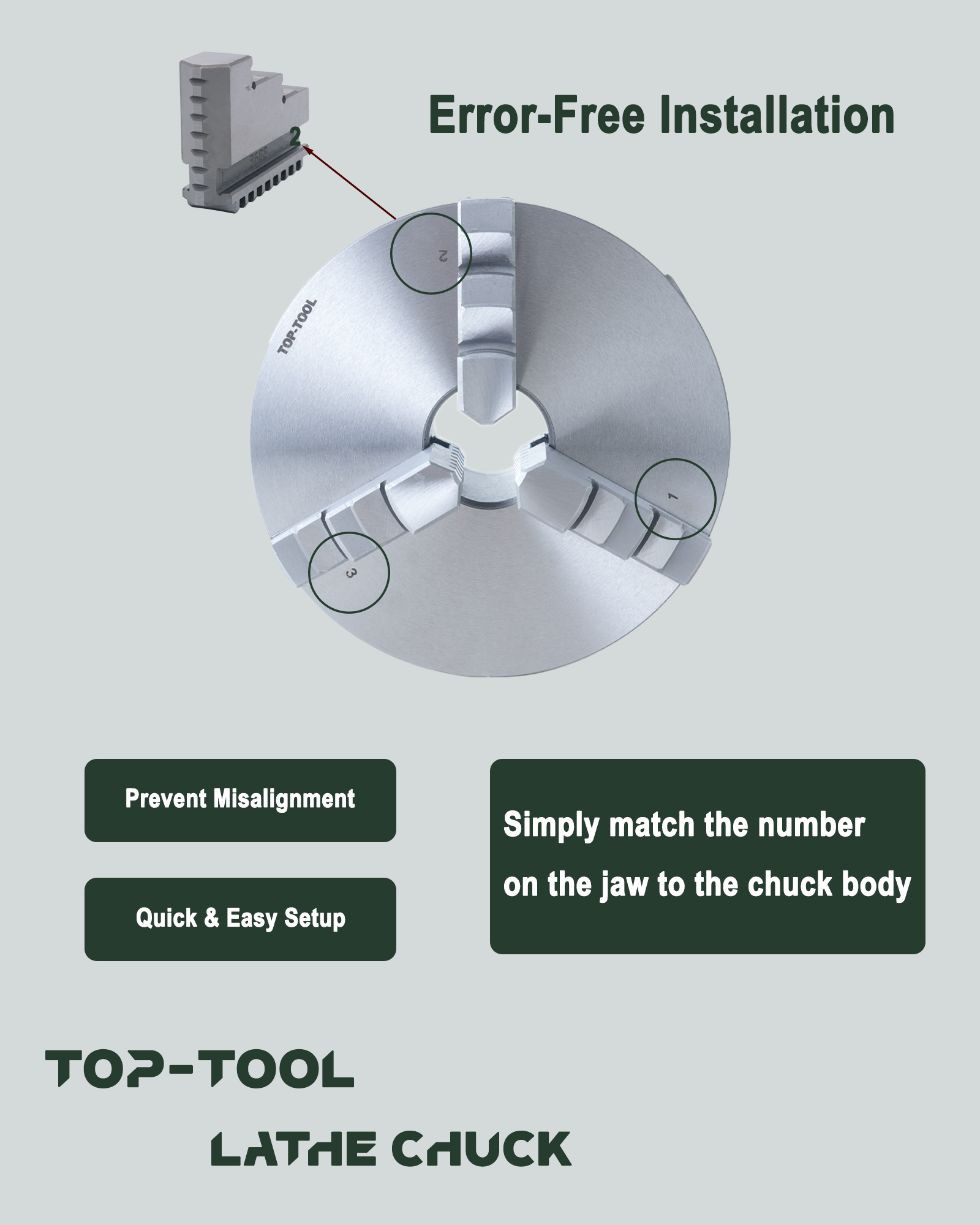
Matching Numbers Make Jaw Refitting Easier
The K11 jaws and matching body slots carry corresponding 1, 2 and 3 marks. After cleaning or when changing the matched jaw set, the operator can identify the correct slot directly, reducing the risk of mixing up the jaw positions.
Refit the jaws in the correct scroll-engagement sequence and check centering after assembly. The marks identify the positions within the matched set; they do not make unrelated jaw sets interchangeable.
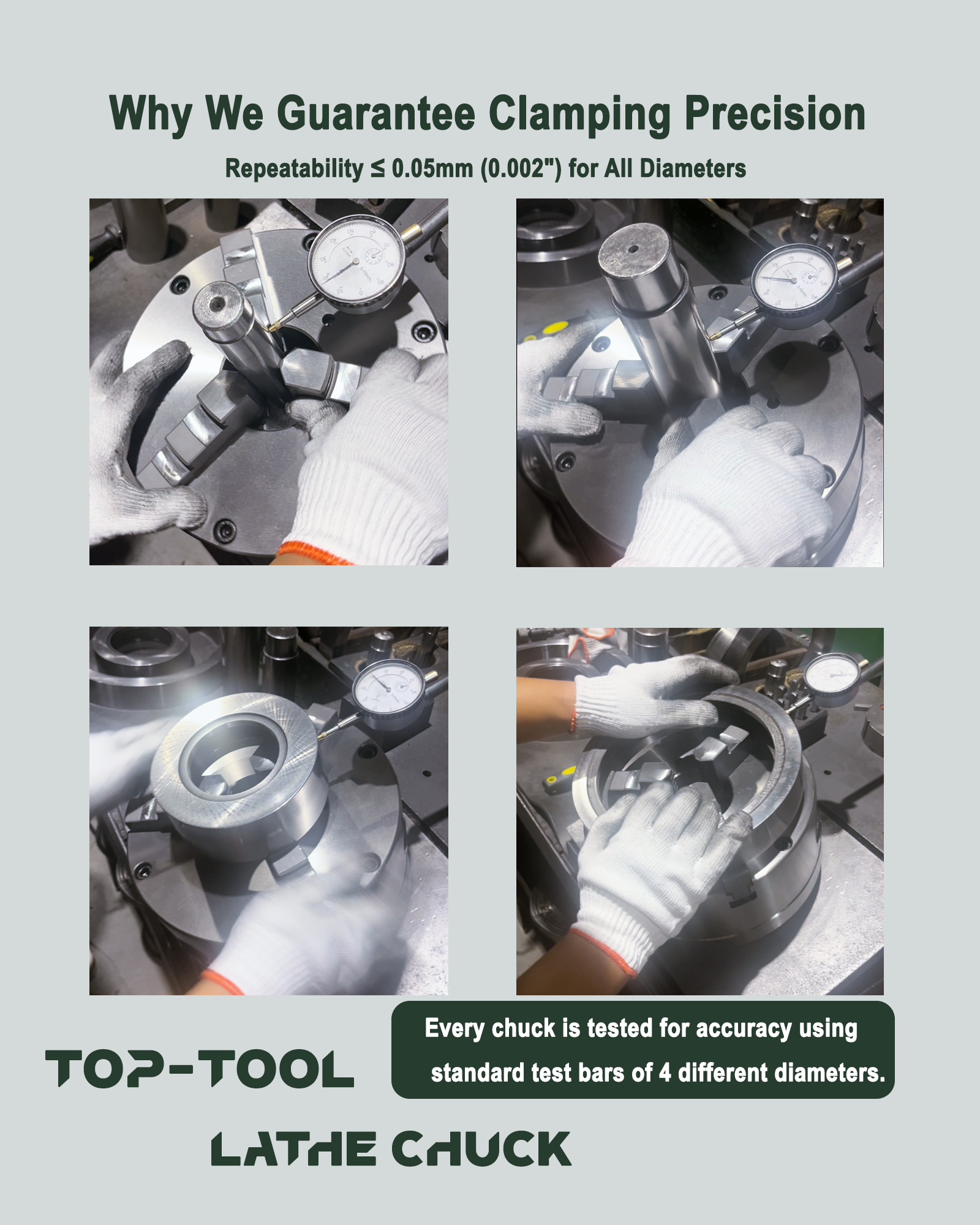
Every Chuck Is Inspected Before Dispatch
Every KORRETTO chuck is inspected before leaving our factory. The photographs show our K11 three-jaw chuck accuracy checks using a dial indicator.
≤ 0.05 mmK11 repeatability is ≤ 0.05 mm. Each chuck is tested for accuracy with standard test bars of four different diameters, checking performance across different gripping positions.
After mounting on the lathe, also check the spindle, adapter seating and workpiece runout. This repeatability specification is not a guarantee that every finished part will have the same machining tolerance.
Choose the Jaw Configuration
Solid jaws
Standard K11 solid-jaw configurations use separate inside and outside jaw sets. Select the gripping step and jaw set for the workpiece.
Two-piece jaws
K11A and K11C jaw configurations use bolted top jaws. Confirm the jaw design together with the complete model, not just the diameter.
Diameter is not gripping range
The size and bore columns describe the chuck geometry. Send the actual gripping diameter and length to select the inside or outside jaw arrangement.
Technical Data and Dimensions
Use the drawing and parameter table to check chuck size, mounting dimensions, clamping range, spindle interface, net weight and machine compatibility.
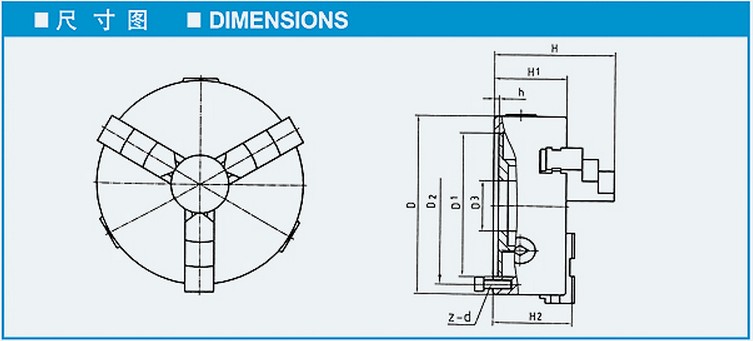
| Size D | D1 | D2 | D3 | H | H1 | H2 | h | z-d | Net Weight (kg) |
|---|---|---|---|---|---|---|---|---|---|
| 80 | 55 | 66 | 16 | 66 | 50 | — | 3.5 | 3-M6 | 1.7 |
| 100 | 72 | 84 | 22 | 74.5 | 55 | — | 3.5 | 3-M8 | 3.0 |
| 125 | 95 | 108 | 30 | 78 | 55 | — | 3.5 | 3-M8 | 4.5 |
| 130 | 100 | 115 | 30 | 86 | 60 | — | 3.5 | 3-M8 | 5 |
| 160 | 130 | 142 | 45 | 95 | 65 | — | 5 | 3-M8 | 8.2 |
| 160A | 130 | 142 | 45 | 109 | 65 | 71 | 5 | 3-M8 | 8.3 |
| 165 | 130 | 145 | 45 | 96.5 | 66.5 | — | 4.5 | 3-M8 | 9.3 |
| 190 | 155 | 172 | 55 | 105 | 75 | — | 5 | 3-M10 | 13.8 |
| 200 | 165 | 180 | 65 | 109 | 75 | — | 5 | 3-M10 | 15.1 |
| 200C | 165 | 180 | 65 | 122 | 75 | 78 | 5 | 3-M10 | 14.1 |
| 200A | 165 | 180 | 65 | 122 | 75 | 80 | 5 | 3-M10 | 14.1 |
| 240 | 195 | 215 | 70 | 120 | 80 | — | 8 | 3-M12 | 24 |
| 250 | 206 | 226 | 80 | 120 | 80 | — | 5 | 3-M12 | 25.8 |
| 250C | 206 | 226 | 80 | 130 | 80 | 84 | 5 | 3-M12 | 23.2 |
| 250A | 206 | 226 | 80 | 136 | 80 | 86 | 5 | 3-M12 | 23 |
| 315 | 260 | 285 | 100 | 147 | 90 | — | 7.5 | 3-M16 | 36 |
| 315C | 260 | 285 | 100 | 155 | 90 | 96 | 7.5 | 3-M16 | 36.1 |
| 320C | 265 | 290 | 100 | 155 | 90 | 96 | 7.5 | 3-M16 | 40.1 |
| 320A | 265 | 290 | 100 | 163.5 | 90 | 99.5 | 7.5 | 3-M16 | 40 |
| 325C | 272 | 296 | 105 | 155 | 90 | 96 | 7.5 | 3-M16 | 42 |
| 325A | 272 | 296 | 105 | 169.5 | 96 | 105.5 | 12 | 3-M16 | 46 |
| 380C | 325 | 350 | 135 | 163.5 | 98 | 103.5 | 7.5 | 3-M16 | 60 |
| 400C | 340 | 368 | 130 | 158.5 | 102 | 106.5 | 6 | 3-M16 | 65.8 |
| 500C | 440 | 465 | 200 | 197 | 115 | 121 | 6.5 | 6-M16 | 116.2 |
| 630C | 560 | 595 | 270 | 211.3 | 123 | 130.3 | 8 | 6-M16 | 208 |
| 800C | 710 | 760 | 385 | 247 | 149 | 157 | 8 | 6-M20 | 305 |
| 1000 | 910 | 950 | 400 | 278.6 | 176 | 185 | 8 | 6-M24 | 630 |
| 1250 | 1160 | 1200 | 660 | 280.6 | 178 | 187 | 10 | 6-M24 | 975 |
Dimensions are in mm unless otherwise stated; net weight is in kg. Match the drawing symbols and complete model suffix before ordering. The bore dimension is not the jaw gripping range.
Related Manual Chuck Pages
/IMG_9574.JPG)
/IMG_9571.JPG)
/IMG_9570.JPG)
FAQ
What is a 3-jaw self-centering chuck used for?
It is used for clamping round, hexagonal and regular workpieces where the jaws need to move together toward the center.
Is this the same as a 3-jaw independent chuck?
No. A self-centering chuck moves all jaws together. Independent jaws are adjusted separately.
When should I choose a 3-jaw self-centering chuck?
Choose it when the workpiece has a regular shape and quick centering is more important than individual jaw adjustment.
Can it hold square or irregular parts?
It is mainly intended for round or regular workpieces. Irregular parts usually require a 4-jaw independent chuck or a special fixture.
What should be checked before ordering?
Check chuck size, mounting interface, clamping range, workpiece shape, machine model and required accuracy.
Is this also called a scroll chuck?
Yes. In many lathe applications, a 3-jaw self-centering chuck is also called a scroll chuck because the internal scroll mechanism moves the jaws together toward the center.
Can soft jaws be used on this chuck?
Yes. Soft jaws can be confirmed according to the chuck model and jaw structure. They are useful when the workpiece surface must be protected or when the jaws need to be machined for better contact.
What information is needed for quotation?
Please provide the machine model, spindle nose, chuck diameter, flange dimensions, workpiece drawing or diameter range, clamping length, machining process, and photos of the current chuck if available.